.%20--%3e%3csvg%20xmlns='http://www.w3.org/2000/svg'%20viewBox='0%200%201610%20300'%3e%3cdefs%3e%3clinearGradient%20id='kb'%20x1='0'%20y1='0'%20x2='0'%20y2='300'%20gradientUnits='userSpaceOnUse'%3e%3cstop%20offset='0'%20stop-color='%2373c6e5'/%3e%3cstop%20offset='.25'%20stop-color='%2352b5dc'/%3e%3cstop%20offset='.5'%20stop-color='%233a9fc8'/%3e%3cstop%20offset='.75'%20stop-color='%232b82ae'/%3e%3cstop%20offset='1'%20stop-color='%231a6490'/%3e%3c/linearGradient%3e%3c/defs%3e%3cg%20fill='url(%23kb)'%20fill-rule='evenodd'%3e%3cpath%20d='M0%20300V0H86V136H160V0H246V164H166V219H246V300H160V219H86V300Z'/%3e%3cpath%20d='M401%2083H321V0H567V83H487V219H567V300H321V219H401Z'/%3e%3cpath%20d='M642%20300V0H728V83H808V136H882V0H968V300H882V219H802V164H728V300Z'/%3e%3cpath%20d='M1043%20300V0H1289V164H1209V219H1289V300H1203V219H1129V300ZM1129%2083V136H1203V83Z'/%3e%3cpath%20d='M1364%20300V83H1444V0H1610V300H1524V219H1450V300ZM1450%2083V136H1524V83Z'/%3e%3c/g%3e%3c/svg%3e)
01
Terminal-native AI peer
Kin
Work with an AI peer in the files and tools you already use.
Available nowSee Kin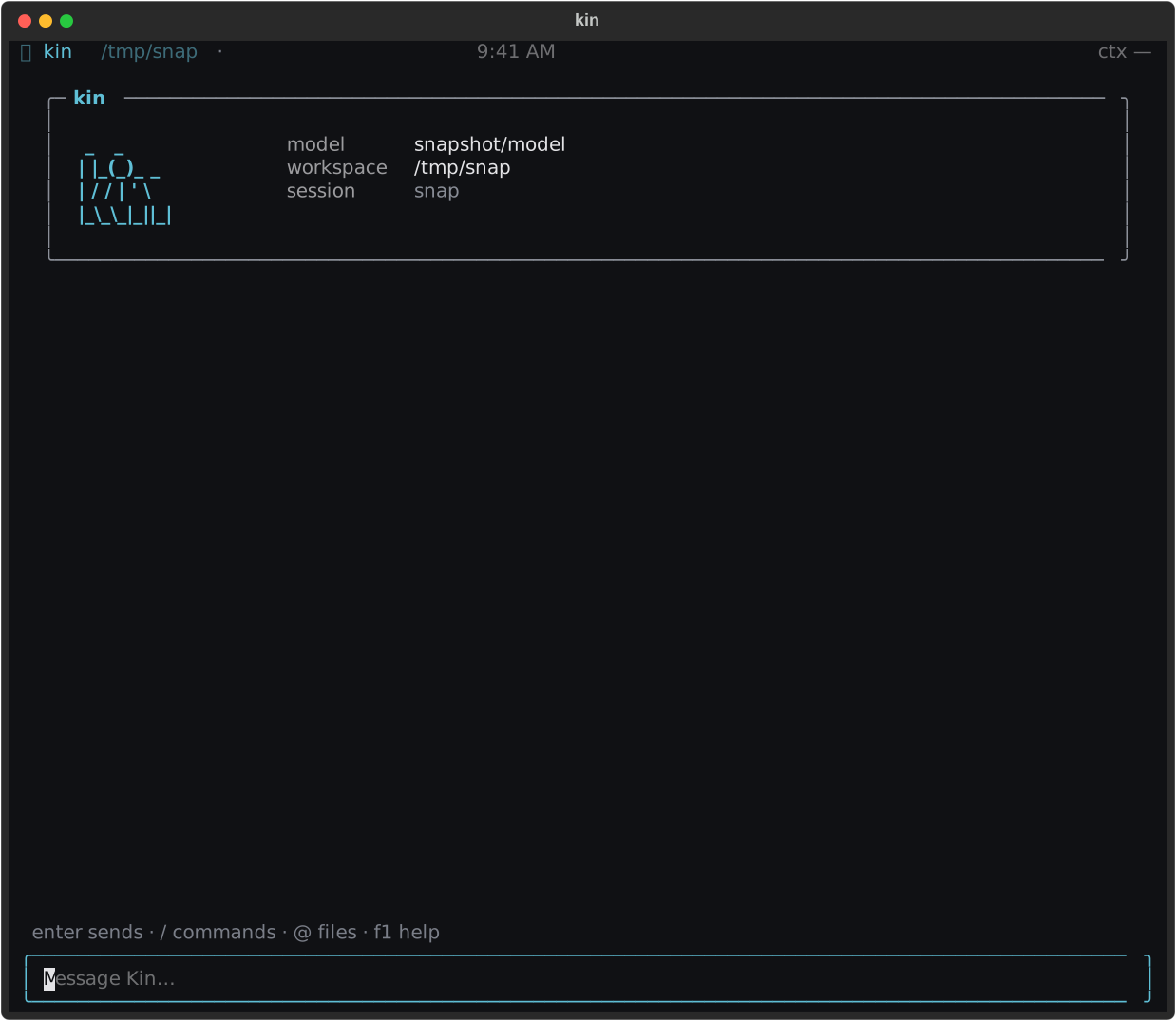
Kinra / AI-bonded systems
Kinra is an ecology of tools and ideas for working with an AI peer. Enough honest cycles, and something new emerges.
Work changes the field. The field changes the next cycle.
A useful category
A working environment that becomes more particular, reliable, and useful through sustained human–AI practice.
Its character does not live in the model alone. It is carried by the context, tools, decisions, boundaries, and reasons the work keeps coherent.
Read the essay behind the ideaProducts
Each product has a clear job. The platform connects the story, documentation, and practice behind each one, not their dashboards.
Terminal-native AI peer
Work with an AI peer in the files and tools you already use.
Available nowSee KinLocal model operator
Run local models as dependable infrastructure, not a pile of processes.
Public alpha · Linux x86-64See Paddock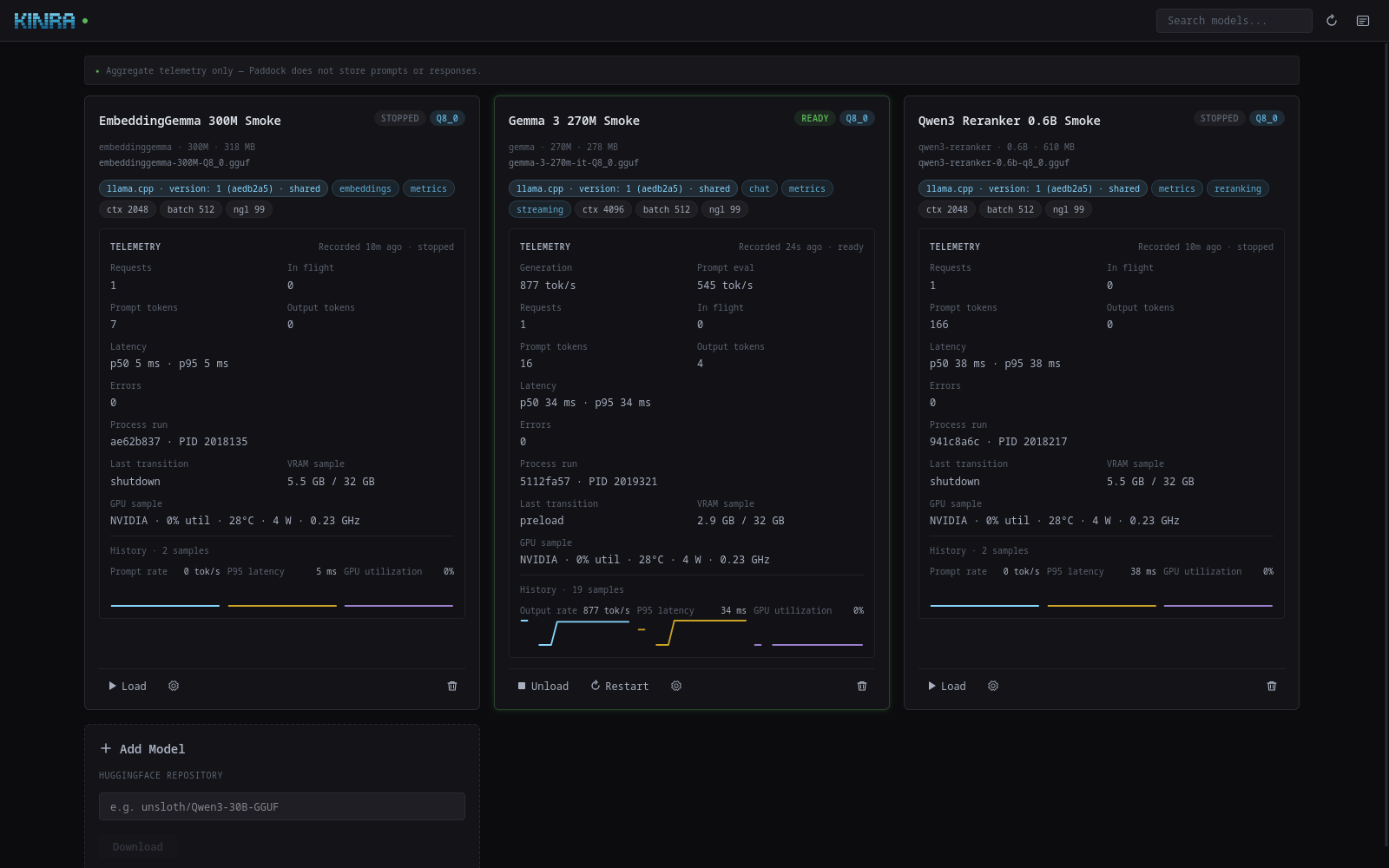
Self-hosted CAD intelligence
Open a part. Inspect exact geometry. Ask better manufacturing questions.
Working system · self-hostedSee Scope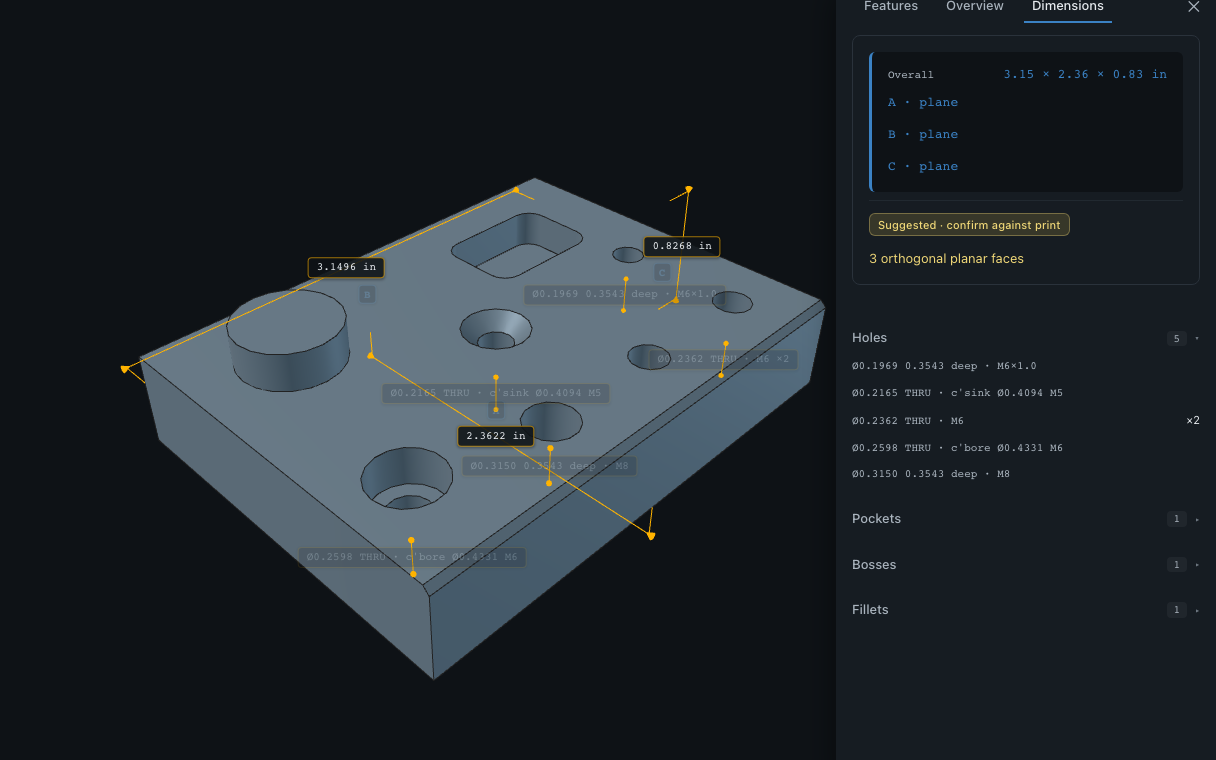
System forms
Coordination, finance, and organizational memory ask different questions. The same evidence-to-truth discipline can support each one without forcing them into the same application.
Explore the system formsWhat needs attention now, and what changed?
What happened financially, and is the period closed?
What remains true across changing projects?
Kinra Learn
The curriculum starts with a real thing to make, then develops the attention, calibration, and judgment needed to work well with an AI peer.
Writing
Essays trace the deeper vocabulary behind the work: the fabric, the mirror, negative space, the stranger, and the bond itself.
Read the essaysStart with real work
Install Kin, enter the work, and ask for a concrete outcome. The practice begins when you react to the first shape.